
Thank you to every midwife and nurse who did our WA violence survey or spoke with us. Your stories are now in front of the people who can fix this.
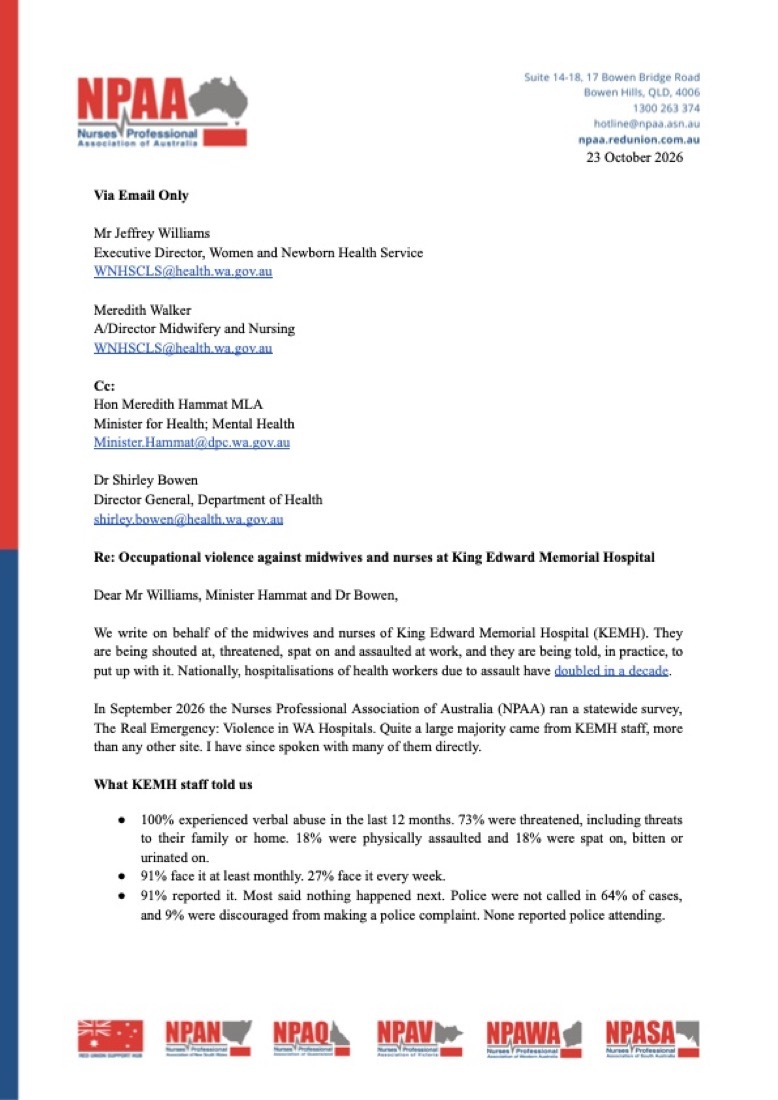
On 23 October we wrote to Jeffrey Williams, Executive Director of the Women and Newborn Health Service, about violence at King Edward Memorial Hospital. More of our survey responses came from KEMH than from any other hospital. Health Minister Meredith Hammat and Director General Dr Shirley Bowen were copied in.
The survey
What KEMH Staff Told Us
- 100%faced verbal abuse in the last 12 months
- 73%were threatened, including threats to their family or home
- 55%have thought about leaving, are looking to leave or have already cut their hours
- 18%were physically assaulted and 18% were spat on, bitten or urinated on.
- 91%face it at least monthly. 27% face it every week.
- 91%reported it. Most said nothing happened next.
- 64%of cases, police were not called. 9% were discouraged from making a police complaint. None reported police attending.
- 100%support hospital-based police or special constables with real powers to search, detain, restrain and move people on.
Being verbally abused, spat on, bitten or urinated on is not part of the job.
In their own words
-
“I was threatened and spat on by a patient and then offered to go to the carpark to fight.”
KEMH staff member -
“We have objects thrown at us, spat at, pushed… We would get penalised for refusing to care for an abusive patient.”
KEMH staff member -
“Constantly exposed to shouting and threats from patients and support people, but expected to continue caring for these patients and treating them with kindness and respect.”
KEMH staff member -
“Multiple verbal threats. Swearing for hours on end. One colleague so traumatised she has been off work.”
KEMH staff member
Context
Why KEMH is Different
KEMH is the state’s tertiary maternity hospital. It cares for women withdrawing from drugs and alcohol, women with serious mental illness, and women from prison admitted before birth. Many stay for weeks. Midwives carry a duty of care to the mother and the unborn baby, so a violent but medically stable woman is rarely discharged. Staff are left to absorb the risk.
A midwife caring for four women and their babies is caring for eight people.
Yet WA’s Nurse/Midwife to Patient Ratios Policy is silent on whether babies count.
Our letter
What We Are Asking For
- Security that matches the risk:minimum 24 hour security staffing at KEMH above the current two officers overnight, and an automatic one to one security special when a patient triggers repeat Code Blacks.
- Real powers:a commitment from the Government to legislate or establish hospital-based police or special constables with powers to search, detain, restrain and move people on, as is now on the table in Victoria.
- Reporting that works:a shorter incident form (or a swipe-card aggression log, as Caboolture Hospital in Queensland used, resulting in permanent security in ED), paid time to complete it where required, and a report from every staff member harmed, not one per event.
- Consequences that hold:an enforceable behaviour agreement pathway, visitor bans and trespass notices, and a written policy on transfer or discharge of medically stable patients who are violent, with clinical safeguards for the baby.
- Ward access control after hours,so a banned or threatening person cannot walk onto a locked ward.
- Police and prosecution:an agreement with WA Police on response times to KEMH, with the hospital supporting staff to make complaints and pursue charges.
- Safe staffing:babies counted in workload, coordinators free of a patient load, and mental health specials for aggressive patients, not only those with a diagnosis.
The rules
What WA Health's Own Policy Requires
The Preventing and Managing Workplace Violence and Aggression Policy (MP 0159/21) requires health services to ensure an appropriate security presence in high risk areas, to encourage and support workers to report assaults and serious threats to WA Police, to record a patient’s risk of aggression in their medical record, and to conduct risk assessments in consultation with workers.
Our members’ experience at KEMH suggests these requirements are not being met.
Mr Williams replied the same day to say he looks forward to responding. A quick reply like that is not the norm, but regardless we look forward to working with him to make KEMH safer for you and your patients.
We have asked for a written response within 14 days. NPAWA will provide an update when it arrives.
Zero tolerance has to mean more than a poster on the wall.
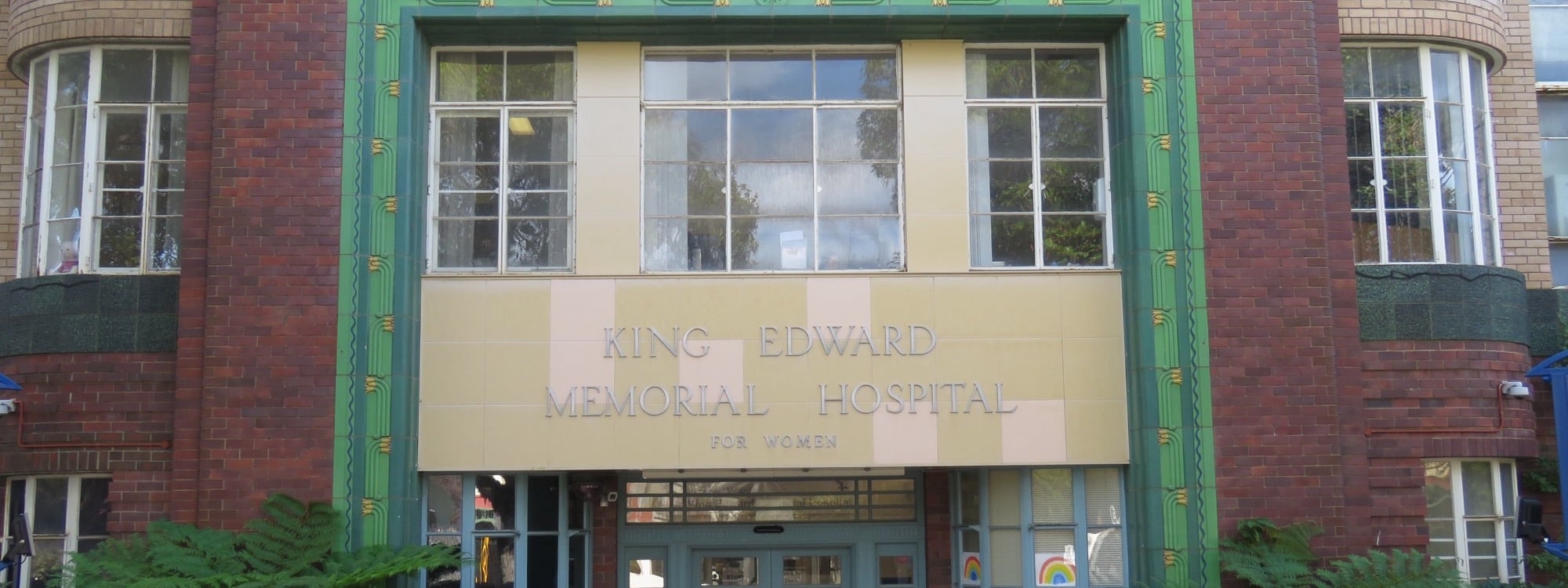
Photo: Calistemon, CC BY-SA 4.0, via Wikimedia Commons.